Research

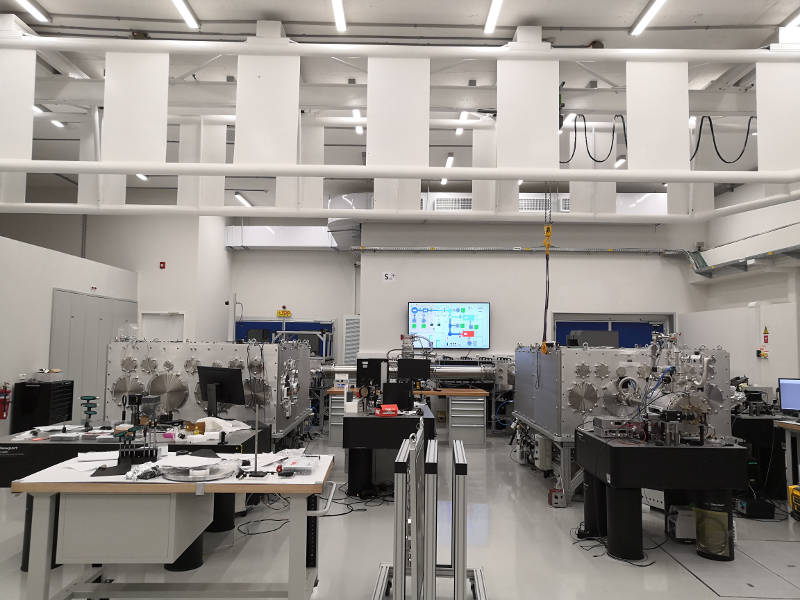
The Schwartz Reisman Center for Intense Laser Physics

Our laboratory is located at the bottom of the accelerator tower in the radio-protected area that hosts a large experimental area with two interaction chambers. The state-of-the-art laser is the most powerful laser system in Israel, and it delivers two 30 femtosecond beams of up to 100 TW powers, also providing the additional probe and heating laser pulses. Design and versatility of the laser system and the experimental laboratory allow to perform innovative experiments with stable and reliable parameters.

Read more

Laser wake field acceleration

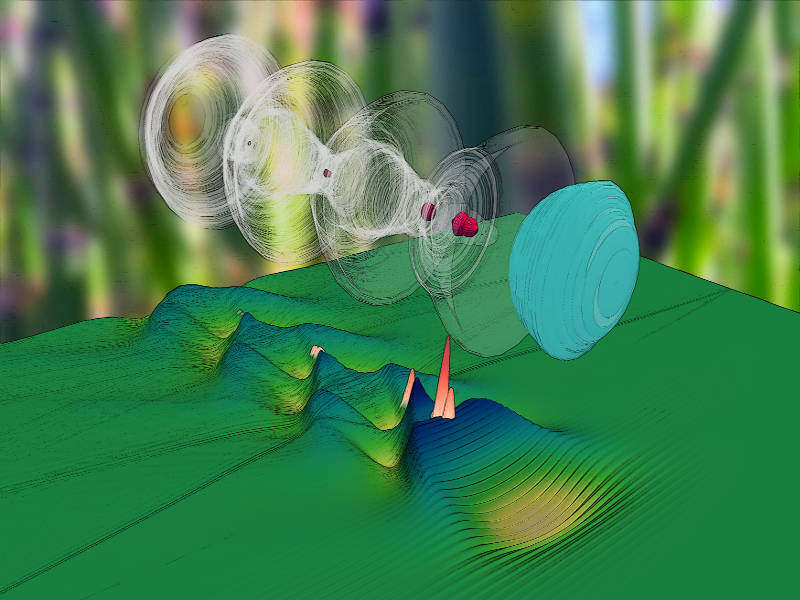
In the gas plasma an ultraintense laser pulse propagates leaving a wake with extremely high electric fields exceeding hundreds of GV/m. This peak electric field follows the laser at a phase velocity close to the speed of light, and it can trap, carry and accelerate plasma electrons to the relativistically high energies. The today's motion control of relativistic electrons with lasers provides an efficient and elegant way to map the space with ultra-intense electric field components, which in turn permits a unique improvement of the beam parameters.

Read more

Laser plasma ion acceleration

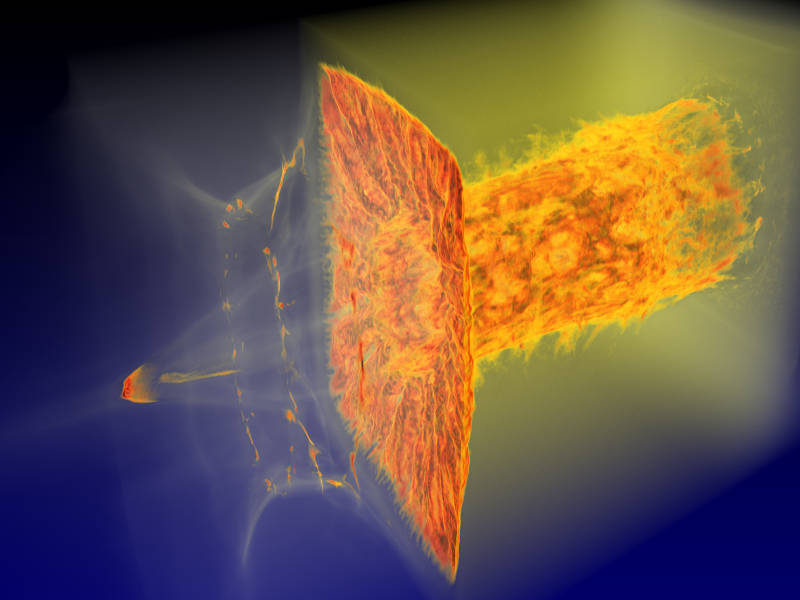
Being much heavier than electrons, plasma protons and ions are mostly insensitive to the rapidly oscillating fields of the laser and electron plasma waves. Therefore, ion acceleration from the hot laser plasmas can only be produced by the much slower fields of charge-separation which emerge during the quasi-neutral or Coulomb explosion processes.

Read more

Compact source of bright X rays

During the laser wakefield acceleration, electron beams are strongly focused by the plasma fields and reach extremely high brightness thanks to their femtosecond durations and micrometric sizes.

Read more

Targetry lab

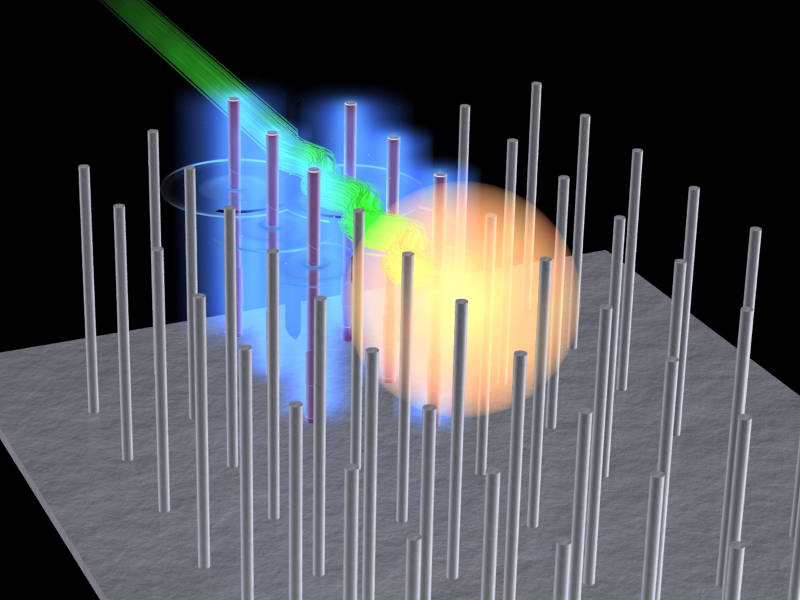
Phenomena occurring in the laser plasma interaction are majorly governed by such parameters of plasma as its charge density distribution, ion constitution and ionisation state.

Read more

Applications

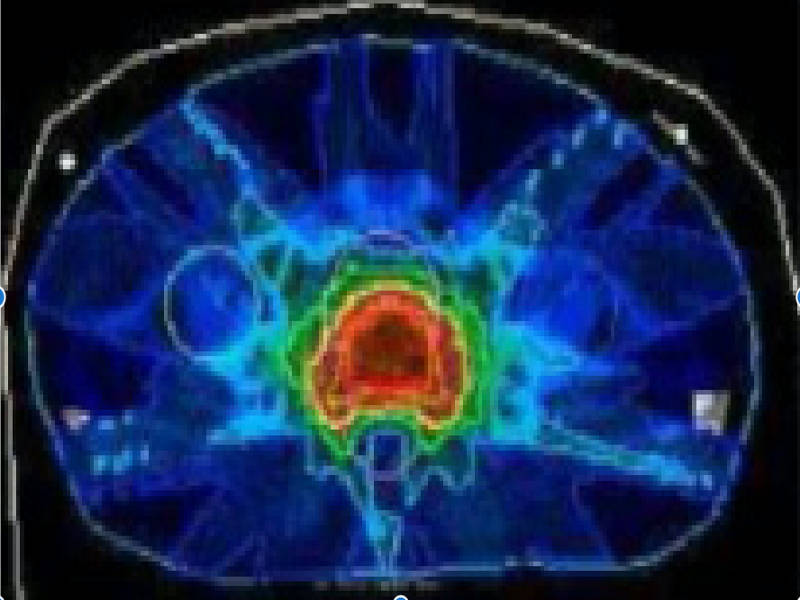
Laser-plasma electron and ion accelerators attract great interest for a wide range of applications thanks to the size, cost and repetition rate of the high-intensity lasers, and to the unique characteristics of the delivered particle beams. The high-impact applications include cancer radiotherapy, imaging with X-ray contrast techniques for early cancer detection, materials characterisation, radiation-driven chemistry, border-security through the detection of dangerous substances, and in a longer term applications in high-energy particle physics.

Read more